ナベヅルは一夫一妻制。
一度出会ったつがいは、生涯を共に過ごす。
求愛ダンスで結ばれ、家族を守り、数千キロの旅を一緒にこなす。浮気なんてしない、純粋な愛の形。
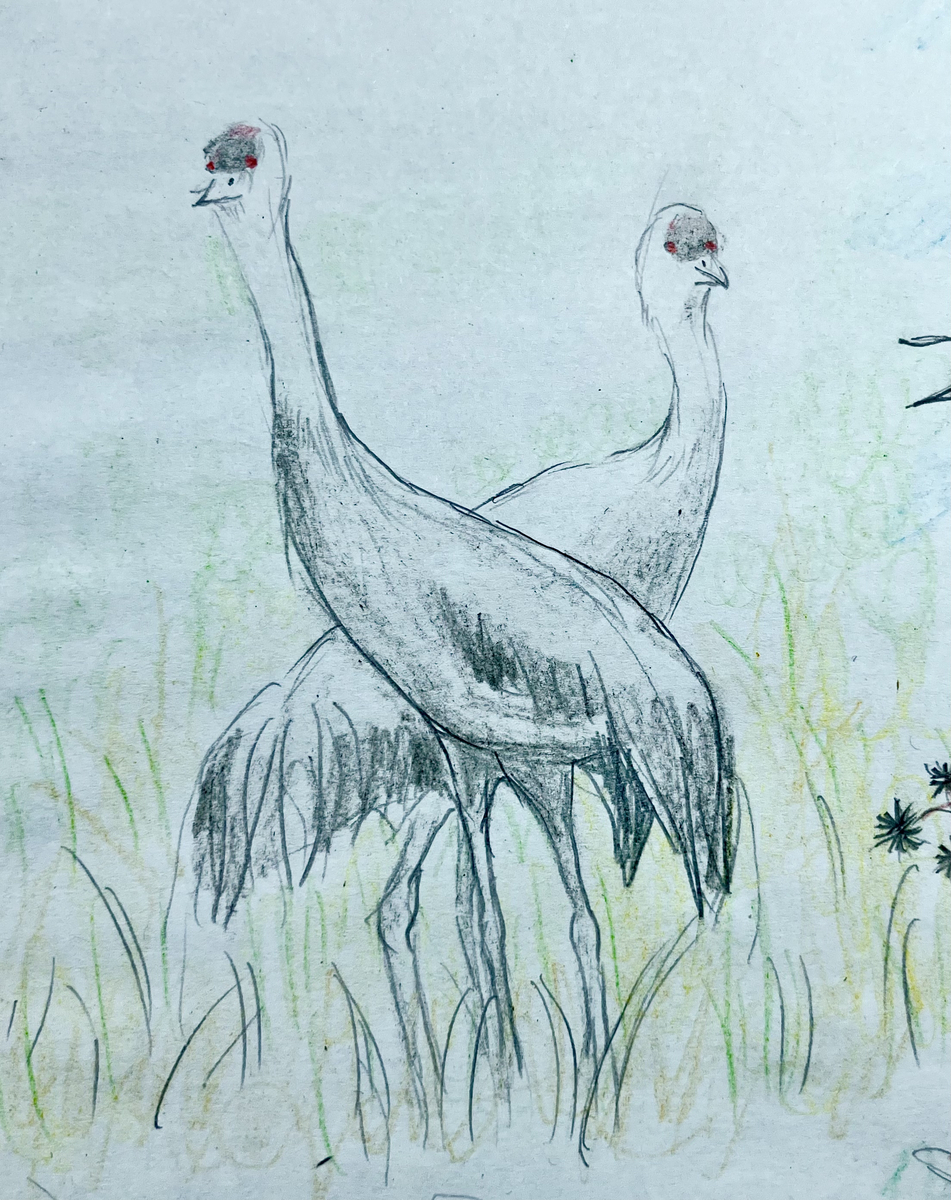
冬の鹿児島県出水市。
Winter in Izumi City, Kagoshima Prefecture.
広大な水田が広がる平野に、遠くから優雅な鳴き声が響き渡る。「クローン、クローン……」。
それは、ナベヅルの声だ。
Across the vast plains covered with rice fields, an elegant call echoes from afar: "Kroon, kroon..."
この地は、世界のナベヅルの約8割から9割が越冬する、特別な場所。
This place is special, where about 80-90% of the world's Hooded Cranes come to overwinter.
毎年秋になると、シベリアや中国の遠い湿原から、数千キロの旅を終えたナベヅルたちがここにやって来る。
Every autumn, Hooded Cranes that have completed a journey of thousands of kilometers from distant wetlands in Siberia or China arrive here.
黒灰色の体に、白い首と頭、そして目の上に赤い裸出部が特徴的な、ツルの中でも小型で美しい鳥だ。
They are small and beautiful among cranes, with a dark gray body, white neck and head, and a distinctive red bare patch above the eyes.
鍋の煤のような体色から「ナベヅル」と名付けられたという。
They are said to be named "Nabedzuru" (Hooded Crane) because of their body color resembling soot from a pot.
私の物語の主人公は、一組のナベヅルのつがい。
The protagonists of my story are a pair of Hooded Cranes.
オスを「クロ」、メスを「シロ」と呼ぼう。
Let's call the male "Kuro" and the female "Shiro."
クロとシロは、もう10年以上一緒にいる。
Kuro and Shiro have been together for over 10 years.
ナベヅルは一夫一妻制。
Hooded Cranes are monogamous.
出会った瞬間から、生涯を共に過ごす。
From the moment they meet, they spend their entire lives together.
浮気なんて、絶対にしない。
They never cheat.
人間の世界では珍しいけど、彼らにとっては当たり前だ。
It's rare in the human world, but for them, it's natural.
すべては、シベリアの広大な湿原から始まった。
It all began in the vast wetlands of Siberia.
春の終わり、雪解け水が輝く沼地で、クロとシロは出会った。
At the end of spring, in a marsh where meltwater sparkled, Kuro and Shiro met.
若い頃のクロは、群れの中で少し目立つ存在だった。
Young Kuro stood out a bit in the flock.
翼を広げて優雅に舞う姿が、シロの心を捉えた。
His graceful dancing with wings spread captured Shiro's heart.
ツルたちの求愛ダンスは有名だ。
The courtship dance of cranes is famous.
互いに飛び跳ね、翼を広げ、首を伸ばして鳴き合う。
They jump toward each other, spread their wings, stretch their necks, and call.
あのダンスで、シロはクロを選んだ。
Through that dance, Shiro chose Kuro.
クロも、シロの優しい瞳に惹かれた。
Kuro was also drawn to Shiro's gentle eyes.
それから、二羽はつがいになった。
After that, the two became a pair.
湿原の奥で巣を作り、2個の卵を産んだ。
They built a nest deep in the wetland and laid two eggs.
交代で温め、夜通し守る。
They took turns incubating and guarded them all night.
孵った雛たちは、ふわふわの茶褐色。
The hatched chicks were fluffy and brownish.
家族4羽で、夏を過ごした。
The family of four spent the summer together.
雛たちに餌の取り方を教え、危険から守り、翼を強くする練習をする。
They taught the chicks how to forage, protected them from danger, and practiced strengthening their wings.
ナベヅルは家族単位で行動する。
Hooded Cranes live in family units.
ナワバリを張り、他のつがいと距離を保ちながら、穏やかな日々を送る。
They establish territories, keep distance from other pairs, and spend peaceful days.
秋が近づくと、南への旅の準備。
As autumn approaches, they prepare for the journey south.
雛たちはもう飛べるようになったが、家族で一緒に渡る。
The chicks can now fly, but the family migrates together.
数千キロの道のりを、V字編隊で飛ぶ。
They fly thousands of kilometers in a V-formation.
クロが先頭を切り、シロが後ろから見守る。
Kuro leads at the front, while Shiro watches from behind.
嵐に遭い、疲れ果てた夜もあった。
There were nights when they encountered storms and were exhausted.
休憩地で餌を探し、互いに羽づくろいをして励まし合う。
At rest stops, they foraged for food and groomed each other's feathers to encourage one another.
あの旅で、二羽の絆はさらに強くなった。
That journey made their bond even stronger.
そして、ようやく出水に到着。
Finally, they arrive in Izumi.
広大な水田に、数千羽の仲間たちがいる。
Thousands of companions are in the vast rice fields.
クロとシロは、少し離れた場所に自分のナワバリを確保する。
Kuro and Shiro secure their own territory in a slightly separate spot.
朝になると、水田でドジョウやタニシを探す。
In the morning, they search for loaches and snails in the rice fields.
They also love fallen grains.
穀物の落ち穂も大好きだ。
In the evening, everyone returns to the roost.
夕方には、みんなでねぐらに戻る。
空を埋め尽くすほどの群れが、優雅に舞い降りる光景は、息を飲む美しさだ。
The sight of a flock filling the sky gracefully descending is breathtakingly beautiful.
冬の出水は、ナベヅルにとって楽園。
Winter in Izumi is a paradise for Hooded Cranes.
でも、脅威もある。
But there are threats too.
生息地の減少や、気候変動。
Loss of habitat and climate change.
世界の個体数は1万数千羽ほどで、絶滅危惧種に指定されている。
The global population is around 10,000 to several thousand, and they are designated as an endangered species.
それでも、クロとシロは毎年ここに戻ってくる。
Even so, Kuro and Shiro return here every year.
つがいとして、家族として。
As a pair, as a family.
ある冬の日、雪がちらつく中、クロが少し弱っていた。
One winter day, as snow flurried, Kuro was a bit weak.
長い旅の疲れか、餌が少なかったのか。
Perhaps from the fatigue of the long journey or lack of food.
シロは心配そうに、クロのそばを離れない。
Shiro anxiously stayed by Kuro's side without leaving.
羽を寄せ合い、体温を分け合う。
They pressed their feathers together, sharing body warmth.
翌朝、クロは回復した。
The next morning, Kuro recovered.
シロの存在が、クロの力になったのだ。
Shiro's presence gave Kuro strength.
春が近づくと、再び北へ。
As spring approaches, they head north again.
雛たちはもう独立し、新しいつがいを探す頃。
The chicks have become independent and are around the time to find new mates.
でもクロとシロは、ずっと一緒。
But Kuro and Shiro remain together forever.
生涯の伴侶として。
As lifelong partners.
ナベヅルのつがいを見ていると、人間も見習うことがあると思う。
Watching Hooded Crane pairs, I think humans have something to learn.
一度決めたパートナーと、どんな困難も乗り越える。
Overcoming any difficulty with the partner you've chosen.
浮気なんて考えない、純粋な愛。
Pure love without even thinking of cheating.
優雅に舞う姿は、永遠の絆を象徴しているようだ。
Their graceful dancing seems to symbolize eternal bonds.
出水のツル観察センターに行くと、そんなつがいをたくさん見られる。
At the Crane Observation Center in Izumi, you can see many such pairs.
家族で寄り添う姿、舞う姿、鳴き合う姿。
Families snuggling, dancing, calling to each other.
心が洗われる。
It cleanses the heart.
もしあなたが、愛について悩んでいるなら、ナベヅルを思い出して。
If you're troubled about love, remember the Hooded Cranes.
浮気できない(笑)彼らの生き方は、きっとヒントになるはず。
Their way of life, where cheating is impossible (lol), will surely give you a hint.
ナベヅルは、ただの鳥じゃない。
Hooded Cranes are not just birds.
愛の先生だ。
They are teachers of love.
ナベヅル(鍋鶴、英語名:Hooded Crane、学名:Grus monacha)
ツル科の鳥で、ツルの中では比較的小型の種です。主に日本で越冬する渡り鳥として知られています。
主な特徴
- 外見:
- 体長:約90〜100cm(ツルとしては小型)。
- 翼開長:約180〜190cm。
- 体重:約3.7〜4kg。
- 成鳥:体は濃い灰色〜黒灰色(鍋の煤のような色で、この名前の由来)。頭部と首の上部は白く、目の上あたりに裸出の赤い皮膚の斑があり、これが「頭巾を被った」ように見えるため英語名がHooded Crane。
- 幼鳥:体は茶褐色で、首は黄色っぽい。
- 雌雄同色。
生態・習性
- 食性:雑食性。植物の種子、根茎、穀物(米、麦など)、昆虫、ドジョウ、タニシなどの動物性食物を食べます。越冬地では水田などで餌を探します。
- 生活:家族単位で行動し、ナワバリを持ちます。渡り鳥で、繁殖地はロシア(シベリア)や中国東北部の湿原。秋に南下し、主に日本(特に鹿児島県出水市)、韓国、中国で越冬します。日本では世界の個体数の約8〜9割が出水に集中して越冬するほど重要な場所です。
- 繁殖:通常2個の卵を産み、家族で行動します。一夫一妻制で、つがいはずっと一緒にいます。
- 保全状況:絶滅危惧Ⅱ類(VU: Vulnerable)。世界個体数は約1万〜1万数千羽と推定され、越冬地の集中化や生息地の減少が脅威となっています。
ナベヅルは優雅で美しい鳥で、日本では出水のツル観察で人気です! 冬に機会があればぜひ見てみてください。
※この物語は、AIと一緒に考えました。
生態や習性は実在の生き物を参考にしていますが、ストーリー自体はフィクションです。
 |
【切手シート】水辺の鳥シリーズ 第3集 エトピリカ・ナベヅル 62円20面シート 平成3年(1991) 価格:2860円 |

 |
価格:50000円~ |

 |
価格:1282円 |

