長野の雪深い山で暮らす野生のニホンザルたち。
厳しい冬を乗り越える彼らの絆と知恵の、
可愛いだけじゃない、強い『雪の守り手』たちの物語。
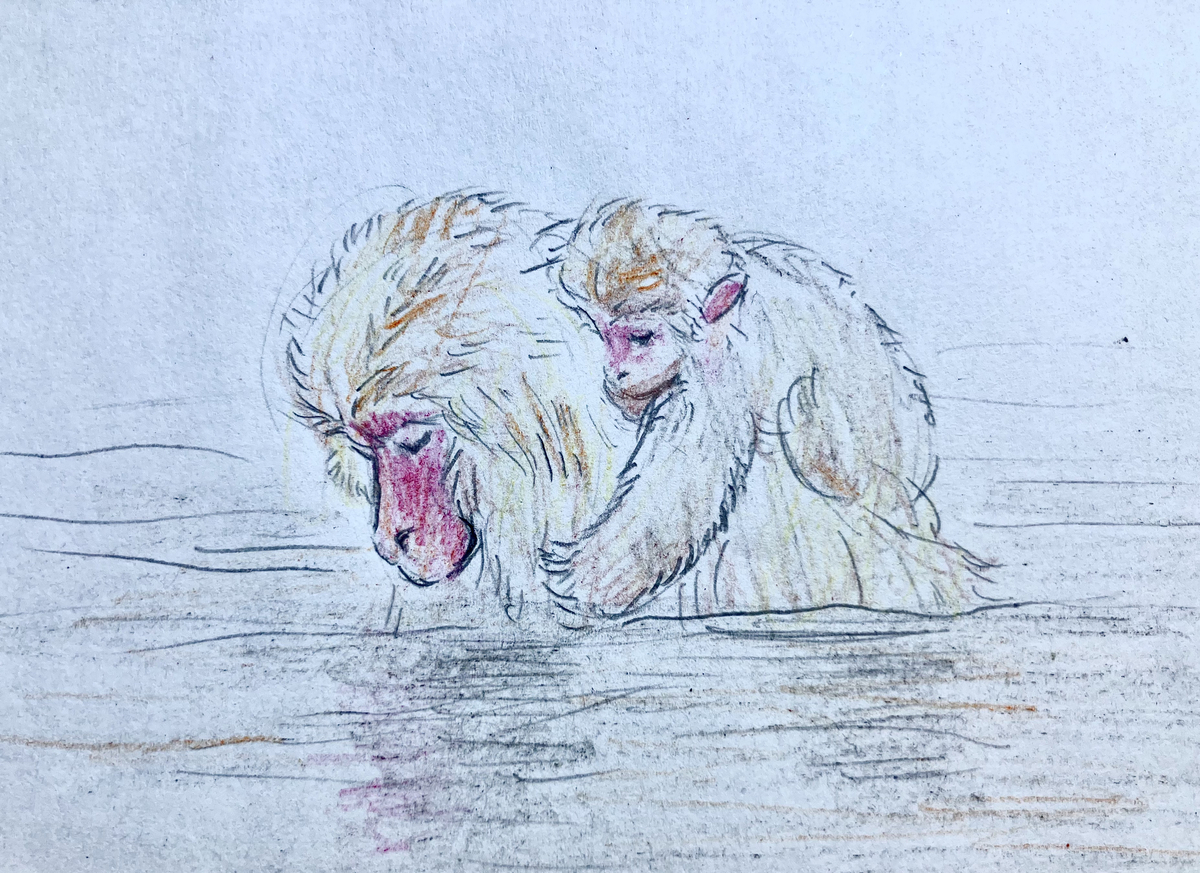
深い雪に覆われた長野の山々。
Deep in the mountains of Nagano, covered with heavy snow.
地獄谷の近く、野生のニホンザルの群れが暮らす森があった。
Near Jigokudani, there was a forest where a troop of wild Japanese macaques lived.
群れの名前は人間にはないが、もしつけるなら「雪の民」と呼ぶのにふさわしい。
The troop had no name given by humans, but if it did, “Snow People” would suit them well.
彼らは世界で最も北に住むサルたちで、厳しい冬を乗り越える知恵を持っていた。
They are the northernmost-living monkeys in the world and possess the wisdom to survive harsh winters.
群れのリーダーは老いたメスザル、名前を「ハナ」と呼ぼう。
The leader of the troop was an old female macaque; let’s call her “Hana.”
ハナはもう20歳を超え、顔の赤みが濃く、毛並みは銀色に輝いていた。
Hana was over 20 years old, with deep red on her face and silver-shining fur.
メス中心のこの群れでは、彼女の言葉が法だった。
In this female-centered troop, her word was law.
オスたちは力で争うが、最終的にメスたちの連帯が群れを守る。
Males compete with strength, but in the end, the solidarity of the females protects the troop.
その冬は特に寒かった。
That winter was especially cold.
雪が毎日降り積もり、木の実や葉は埋もれてしまった。
Snow piled up every day, burying nuts and leaves.
群れの30頭あまりは、温泉の湧く谷底を目指して移動を始めた。
The troop of about 30 monkeys began moving toward the valley bottom where hot springs bubbled.
ハナが先頭に立ち、子連れのメスたちが続き、若いオスたちが周囲を警戒する。
Hana led the way, followed by mothers with babies, while young males stayed alert on the sides.
道中、一番の心配は子猿たちだった。
On the journey, the biggest concern was the baby monkeys.
特に、ハナの娘である「ミコ」が産んだばかりの赤ちゃん「ユキ」。
Especially “Yuki,” the newborn baby of Hana’s daughter “Miko.”
ユキはまだ毛が薄く、母親の背中にしがみついて震えていた。
Yuki’s fur was still thin, and she clung to her mother’s back, shivering.
ミコはユキを抱きしめ、時々止まって毛づくろいをする。
Miko held Yuki close and sometimes stopped to groom her.
群れの他のメスたちも、ミコを助けるように周りを囲む。
The other females in the troop surrounded Miko to help her.
これはニホンザルの文化──子は全員で守る。
This is the culture of Japanese macaques—everyone protects the young.
ある夜、吹雪が激しくなった。
One night, a fierce blizzard struck.
群れは大きな杉の木の下で身を寄せ合った。
The troop huddled together under a large cedar tree.
ハナは高い枝に登り、周囲を見張る。
Hana climbed a high branch to keep watch.
遠くにキツネの影が見えたが、すぐに去った。
She saw the shadow of a fox in the distance, but it soon left.
オスたちの「ガオガオ」という低い威嚇音が響く。
Low growls of “gao gao” from the males echoed.
みんなで体をくっつけ、暖を取る。
Everyone pressed their bodies together to share warmth.
ニホンザルはこうして零下の夜を耐えるのだ。
This is how Japanese macaques endure nights below freezing.
翌朝、雪が止んだ。
The next morning, the snow stopped.
群れはようやく温泉に到着した。
The troop finally reached the hot springs.
湯気が立ち上る岩の露天風呂──人間が作ったものではなく、自然の贈り物。
Steam rose from the rocky open-air bath—a gift of nature, not made by humans.
ハナが最初に湯に浸かる。
Hana was the first to soak in the water.
熱い湯が冷えた体を溶かすように温める。
The hot water warmed their frozen bodies as if melting them.
次にメスたちが入り、子猿たちを中央に置いて守る。
Next, the females entered, placing the babies in the center to protect them.
ユキは初めての温泉に驚き、母親の胸に顔を埋めた。
Yuki was startled by her first hot spring and buried her face in her mother’s chest.
でもすぐに慣れ、湯の中で遊ぶようになった。
But she soon got used to it and began playing in the water.
小さな手で水しぶきを上げ、他の子猿たちとじゃれ合う。
She splashed water with her tiny hands and frolicked with the other babies.
ミコは優しくユキの毛を洗う。
Miko gently washed Yuki’s fur.
これは有名な「芋洗い」のような行動──清潔を保ち、絆を深める。
This is similar to the famous “potato washing” behavior—to stay clean and deepen bonds.
若いオス「カイ」は群れの外縁にいた。
A young male “Kai” stayed on the outer edge of the troop.
彼はまだ10歳、力は強いが階級は低い。
He was still 10 years old—strong but low in rank.
時々ハナに睨まれ、順位を思い知らされる。
Sometimes glared at by Hana, he was reminded of his position.
カイは温泉に入らず、木の上から見張る役。
Kai did not enter the hot spring; his role was to watch from a tree.
食料を探すのも彼の仕事だ。
Finding food was also his job.
雪の下から凍った木の実を掘り出し、群れに持ち帰る。
He dug frozen nuts from under the snow and brought them back to the troop.
ある日、カイは遠くの斜面で人間の気配を感じた。
One day, Kai sensed humans on a distant slope.
観光客だ。
They were tourists.
カメラを構え、近づいてくる。
They approached with cameras ready.
ニホンザルは人間に慣れているが、餌をもらうと依存してしまう。
Japanese macaques are used to humans, but receiving food leads to dependency.
ハナはそれを嫌う。「野生を失うな」と、群れに教える。
Hana disliked it and taught the troop, “Do not lose your wild nature.”
カイは低い唸り声を上げ、群れに警告。
Kai let out a low growl to warn the troop.
みんなが温泉から上がり、森へ逃げる。
Everyone climbed out of the hot spring and fled into the forest.
ユキはミコの背中で揺られ、泣きそうな顔。
Yuki bounced on Miko’s back with a face that looked ready to cry.
でも無事だった。
But they were safe.
春が近づくと、雪が溶け始めた。
As spring approached, the snow began to melt.
新たな葉が芽吹き、食料が増える。
New leaves sprouted, and food became plentiful.
ユキは歩けるようになり、群れの中で遊び回る。
Yuki could now walk and played around within the troop.
ハナは老いを感じ、娘のミコにリーダーの座を譲る準備をする。
Feeling her age, Hana prepared to pass leadership to her daughter Miko.
ニホンザルの社会はこうして続く──メスからメスへ、知恵が伝わる。
This is how Japanese macaque society continues—wisdom passed from female to female.
カイも大人になり、新しい群れを探す時が来るかもしれない。
Kai was becoming an adult and might soon leave to find a new troop.
でも今は、ここにいる。
But for now, he stayed here.
雪の森で、温泉の湯で、仲間と共に。
In the snowy forest, in the hot spring water, together with his companions.
彼らはただ生きるのではない。
They do not merely survive.
文化を持ち、絆を紡ぎ、厳しい自然に挑む。
They have culture, weave bonds, and challenge harsh nature.
人間が見る「可愛い雪ザル」の裏側に、そんな強さがある。
Behind the “cute snow monkeys” that humans see, there is such strength.
冬が終わり、森が緑に染まる頃、ユキは母親の手を離れ、初めて木に登った。
When winter ended and the forest turned green, Yuki let go of her mother’s hand and climbed a tree for the first time.
ハナは遠くからそれを見守り、満足げに目を細めた。
Hana watched from afar and narrowed her eyes in satisfaction.
雪の守り手たちは、また一つ、季節を越えた。
The guardians of the snow had overcome yet another season.
(終わり)
ニホンザル(学名:Macaca fuscata)
日本固有のサルで、英語では「Japanese macaque」や「snow monkey」(雪ザル)と呼ばれます。人間以外の霊長類として、世界で最も北に生息する種です。
外見の特徴
- 顔とお尻:大人になるとピンクがかった赤い皮膚が特徴的。毛が生えていない部分が目立ちます。
- 体毛:灰色〜褐色で、寒い地域(例:東北や中部)の個体は毛が長く密に生え、体が大きめになります。
- 体サイズ:オスが平均11kg前後、メスが8kg前後。オスの方が大きく、性的二形性がみられます。尾は短いスタンプ状です。
生息地と適応
- 日本(本州、四国、九州の島々)に分布。青森県の下北半島が北限で、雪深い地域でも生きられます。
- 特に有名なのが、長野県の地獄谷野猿公苑などで見られる温泉に入る行動。冬の寒さをしのぐために温泉に浸かる習性があり、世界的に人気の「スノーモンキー」のイメージです!
生態と行動
- 社会性:20〜100頭以上の群れで暮らし、メス中心の厳しい階級社会。オスは大人になると群れを離れることが多いです。
- 食性:雑食性。果実、葉、昆虫、キノコ、時にはカニや卵も食べます。好物は甘い果物(カキやナシなど)。
- 知能:非常に高く、学習能力が優れています。芋洗い行動(食べ物を洗って食べる)や温泉利用が文化として子に伝わる例もあります。また、猿回しで芸を覚えるのもこの種です。
- 繁殖:出産は春〜夏。妊娠期間約6ヶ月で、1頭の子を産みます。
ニホンザルは人間に近く、表情豊かで可愛らしいですが、農作物被害(猿害)も引き起こすため、対策が必要な一面もあります。野生で見かけたら、餌を与えず距離を保って観察してくださいね!
※この物語は、AIと一緒に考えました。
生態や習性は実在の生き物を参考にしていますが、ストーリー自体はフィクションです。
 |
仲間と暮らすニホンザル たより、たよられ、生きてます。 (命のつながり 2) [ 福田幸広 ] 価格:1980円 |

 |
価格:528円 |

