湖の水面下には、肉眼では見えない小さな「星」たちが生きています。
珪藻の一種・アステリオネラ(ホシガタケイソウ)の物語です。
顕微鏡の向こうに広がる、静かで美しい世界をどうぞお楽しみください。
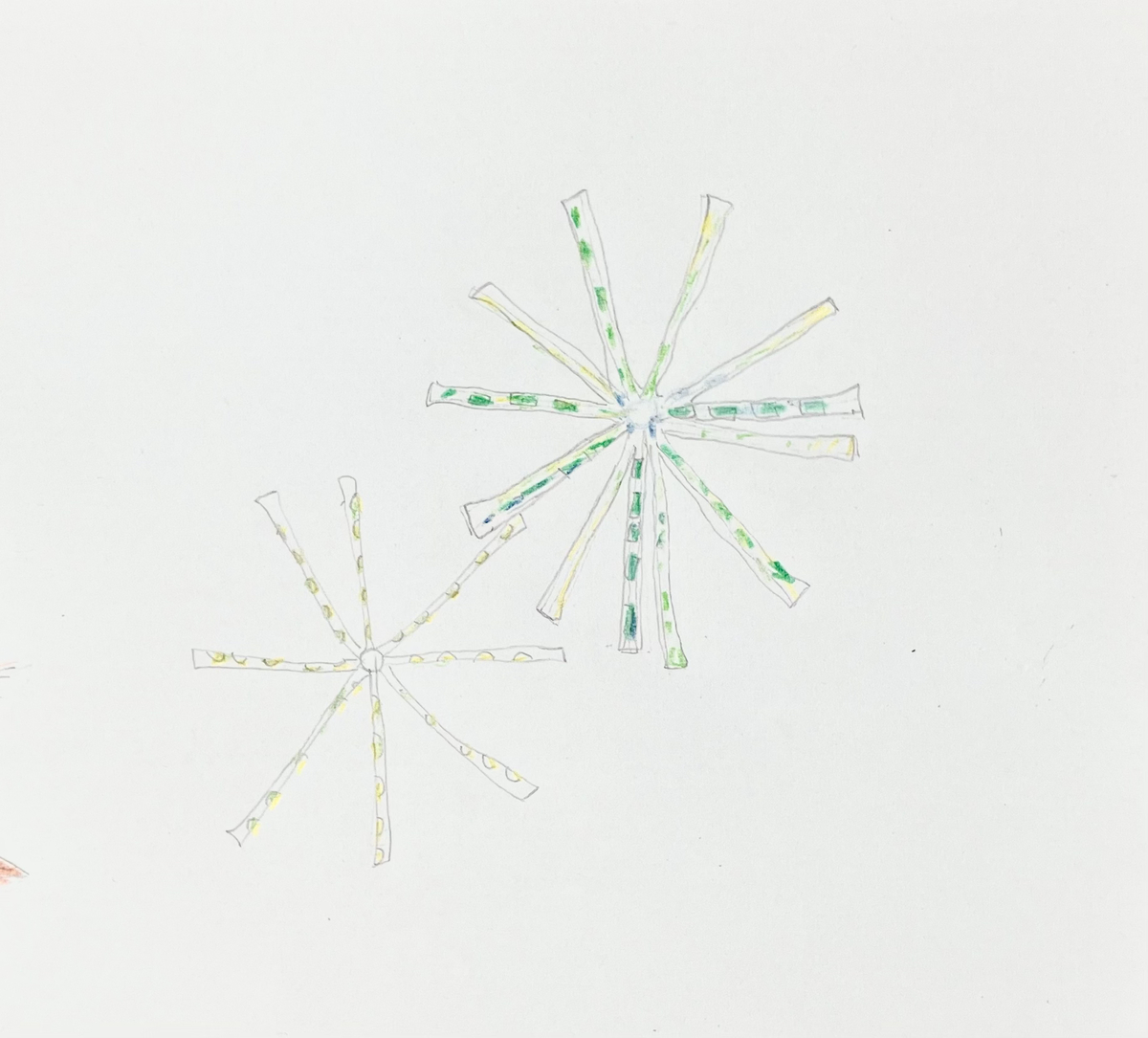
星形(stellate)の群体を形成する ホシガタケイソウ
私たちアステリオネラは、湖の静かな水面下で生まれた小さな星のかけらです。
We Asterionella are tiny star fragments born beneath the quiet surface of the lake.
細長い棒状の体を持ち、両端が少しふくらんだその姿は、
With our slender, rod-shaped bodies and slightly swollen ends,
まるで夜空に散らばる星の断片のよう。
we look just like scattered pieces of stars from the night sky.
長さは四十から百三十マイクロメートルほど。
We measure about forty to one hundred thirty micrometers in length.
人間の目には見えないほど小さいけれど、
Though we are far too small for the human eye to see,
私たちが集まれば
when we gather together
美しい星形の群体になります。
we form beautiful star-shaped colonies.
私の名前はフォルモーサ。
My name is Formosa.
アステリオネラ・フォルモーサ。
Asterionella formosa.
美しいという意味を持つその名を、私たちは誇りに思っています。
We take pride in this name, which means “beautiful.”
細胞の一端を粘液のパッドでつなぎ合わせ、四個、八個、
Linking one end of our cells with pads of mucilage, four, eight,
ときには十六個以上の仲間が手をつなぐように放射状に並ぶ。
or sometimes more than sixteen of us arrange ourselves in a radiating pattern, as if holding hands.
春になると特に完璧な星形になり、
In spring we form especially perfect stars;
秋になると少し崩れてジグザグに連なることもあります。
in autumn we sometimes loosen into zigzag chains.
でも、どの形であっても私たちは同じ。
Yet no matter the shape, we remain the same
湖を漂う一つの小さな宇宙なのです。
—one small universe drifting through the lake.
私たちの体は、ケイ素でできた硬い殻に守られています。
Our bodies are protected by hard shells made of silica.
二枚の殻がぴったり重なり合い、
Two shells fit perfectly together,
中には黄金色の葉緑体がいくつも浮かんでいます。
and inside float several golden-yellow chloroplasts.
太陽の光を浴びて、
Basking in sunlight,
水中の二酸化炭素と水から栄養を作り出す。
we create nutrients from the carbon dioxide and water around us.
それが私たちの生きる基本です。
That is the foundation of our life.
春先、まだ水が冷たいころ、
In early spring, while the water is still cold,
湖底から湧き上がる養分をたっぷり吸収して、
we absorb the nutrients welling up from the lake bottom
私たちは爆発的に増えます。
and multiply explosively.
人間はそれを「珪藻の春期大増殖」と呼びますが、
Humans call this the “spring diatom bloom,”
私たちにとってはただの日常であり、喜びの季節です。
but for us it is simply everyday life—and a season of joy.
仲間が次々と分裂し、星が星を生み、
As companions divide one after another, stars giving birth to stars,
湖一面が淡い茶色に染まるころ、
and the whole lake turns a pale brown,
私たちは自分たちがどれほど多くの命を支えているかを実感します。
we truly feel how many lives we support.
小さな魚の稚魚やミジンコたちが、私たちの群体をそっとつついて食べていく。
Tiny fish fry and water fleas gently nibble at our colonies.
そのとき私たちは少し寂しいけれど、同時に誇らしい。
At those moments we feel a little lonely, yet also proud,
私たちが蓄えたエネルギーが、湖の食物連鎖の最下層を支えているのですから。
for the energy we have stored supports the very base of the lake’s food chain.
でも、すべてが穏やかなわけではありません。
Not everything is peaceful, however.
強い流れに揉まれて群体が壊れたり、
Strong currents can break our colonies apart,
時にはツボカビという小さな寄生者が体に取りついたりします。
and sometimes a tiny parasite called a chytrid fungus attaches itself to us.
感染した仲間は、自らを犠牲にして周囲への広がりを止めることがあります。
Infected companions may sacrifice themselves to stop the spread to those around them.
それは悲しい選択だけれど、
It is a sorrowful choice,
星のかけらとしての私たちには、そういう静かな勇気もあるのです。
yet as star fragments we also possess that quiet courage.
私たちには足がありません。
We have no feet.
自分の意志で泳ぐこともできません。
We cannot swim by our own will.
ただ、水の流れと、わずかな浮力に身を任せて漂うだけ。
We simply drift, entrusting ourselves to the water’s current and a faint buoyancy.
それでも、群体を作ることで沈みにくくなり、
Even so, by forming colonies we become less likely to sink
光の届く表層に長く留まることができます。
and can remain longer in the sunlit surface layer.
これは祖先たちが長い時間をかけて身につけた知恵なのでしょう。
This must be the wisdom our ancestors acquired over long ages.
時折、水道の取水口近くまで流されると、
Occasionally we drift near the intake of a waterworks
人間のろ過装置を詰まらせて迷惑をかけることもあります。
and clog the human filtration systems, causing trouble.
申し訳ないけれど、
We are sorry,
それもまた、私たちがそこに確かに存在している証拠なのです。
yet that too is proof that we truly exist there.
無性生殖で分裂を繰り返すうちに、
As we repeatedly divide through asexual reproduction,
私たちの体は少しずつ小さくなっていきます。
our bodies gradually grow smaller.
殻の仕組み上、どうしてもそうなるのです。
Because of the structure of our shells, it is inevitable.
いつか有性生殖の時が来て、再び大きな体を取り戻す日を待ちながら、今を生きています。
We live in the present while waiting for the day when sexual reproduction arrives and we can regain our larger size once more.
大きさは変わっても、
Even if our size changes,
星形に集うという本質は変わりません。
the essence of gathering into stars never does.
夜、湖面に月が映るころ、
At night, when the moon is reflected on the lake’s surface,
私たちは静かに考えます。
we quietly reflect.
この広い水の世界で、私たちはただの微生物にすぎないのかもしれない。
In this vast watery world we may be nothing more than mere microorganisms.
でも、星のかけらとして輝く瞬間は、確かにここにあります。
Yet the moments when we shine as star fragments are truly here.
春の大発生のとき、無数の仲間と一緒に光を浴びながら漂うあの感覚。
That sensation of drifting together with countless companions while bathed in light during the spring bloom
それは、小さな存在が大きな湖を染め上げる奇跡です。
—it is the miracle of small beings coloring a great lake.
人間の皆さんが顕微鏡を覗いて「ホシガタケイソウだ」と呟くとき、
When you humans peer through a microscope and murmur “It’s Hoshigata-keiso,”
どうか思い出してください。
please remember:
そこには、ただの星形ではなく、
what you see is not merely a star shape,
長い旅をしてきたかけらの物語があることを。
but the story of fragments that have journeyed a long way.
私たちは今日も、静かに、
Even today we continue, quietly
しかし確かに、この湖で星を描き続けています。
yet surely, to draw stars in this lake.
いつか私たちの殻が沈み、湖底の泥に埋まって化石になる日が来るかもしれません。
Someday our shells may sink and become fossils buried in the mud of the lake bottom.
そのときも、星のかけらの形は残るでしょう。
Even then, the shape of the star fragments will remain.
未来の誰かがそれを見つけたとき、
If someone in the future finds them
遠い昔の春の湖を想像してくれたら、
and imagines that distant spring lake of long ago,
それだけで私たちは幸せです。
that alone will make us happy.
私たちアステリオネラは、今日も水の中で、小さな星を灯しています。
We Asterionella are still lighting tiny stars in the water today.
湖よ、ありがとう。
Thank you, lake.
光よ、
Thank you, light.
ありがとう。そして、私たちを見てくれるあなたにも、ありがとう。
And thank you, too, for looking at us.
アステリオネラ(Asterionella、和名:ホシガタケイソウ)
珪藻(ケイソウ)の一種で、淡水(一部海産も記録あり)の浮遊性羽状珪藻です。
主に湖沼や流れの緩やかな河川などの植物プランクトンとして見られ、特にAsterionella formosaが代表的で
世界的に広く分布します。
主な特徴
- 形態(細胞)
細胞は細長い棒状(線形~線状披針形)で、長さはおおむね40~130μm(平均60~85μm程度)、幅1~4.5μm前後。両端がやや膨らんだ(頭状・capitate)形状で、特に基部側(足極・footpole)がより大きく膨らむ異極性(heteropolar)を示します。殻面(valve view)では細長く、帯面(girdle view)でも両端が膨らみます。
殻は珪酸質で、条線(striae)は細かく平行、中央のsternumは非常に細い。縁に小さな棘(spines)がある場合があり、両極近くに孔野(apical pore field)や唇状突起(rimoportula)が見られます。細胞内には多数の小さな円盤状の黄褐色葉緑体(クロロフィルa, cとフコキサンチンなど)と中央に核があります。
- 群体の特徴(名前の由来)
単独でなく、細胞の一端(主に基部)を粘液パッドで接着して星形(stellate)の群体を形成するのが最大の特徴です。通常4~8個(時に16~20個以上)の細胞が放射状に並び、星や螺旋状に見えます。部分的にジグザグになることもあり、春は星形、秋はジグザグになりやすいという観察もあります。群体は浮力を保ちやすく、沈降しにくいです。処理標本では群体が壊れやすいです。
- 生態・生活
プランクトン性で、特に春(低水温を好む傾向)に大増殖(珪藻の春期大発生)しやすく、湖沼などで大量発生すると水が茶色っぽくなり、水道のろ過障害や臭気の原因になることがあります。栄養塩(特にケイ素)の豊富な中~富栄養の水域でよく見られます。運動能力はなく、水流や重力で分布します。寄生性のツボカビ(Zygorhizidiumなど)に感染しやすく、感染細胞がアポトーシスで周囲を守る現象も知られています。
珪藻全体の特徴として、二枚の殻(frustule)を持ち、無性生殖で分裂を繰り返すうちにサイズが小さくなり、有性生殖で元の大きさに戻るサイクルがあります(A. formosaでは有性生殖の詳細観察が少ない場合もあります)。
顕微鏡で観察すると、星形の群体が非常に特徴的で識別しやすい種類です。
詳細な同定には殻の微細構造(SEMなど)を確認することがあります。
※この物語は、AIと一緒に考えました。
This story was thought up together with an AI.
生態や習性は実在の生き物を参考にしていますが、ストーリー自体はフィクションです。
The ecology and habits are based on real living things, but the story itself is fiction.
