シロエビ(白えび)は、富山湾の宝石と呼ばれる美しい海の生き物です。
その神秘的な野生の生活を、1匹のシロエビの生涯を描いた短い物語。
短い命を懸命に生きるシロエビの姿を、ぜひ日本語と英語でじっくり読んでみてください。
富山湾の豊かな海と、儚くも美しい命を感じていただければ嬉しいです。
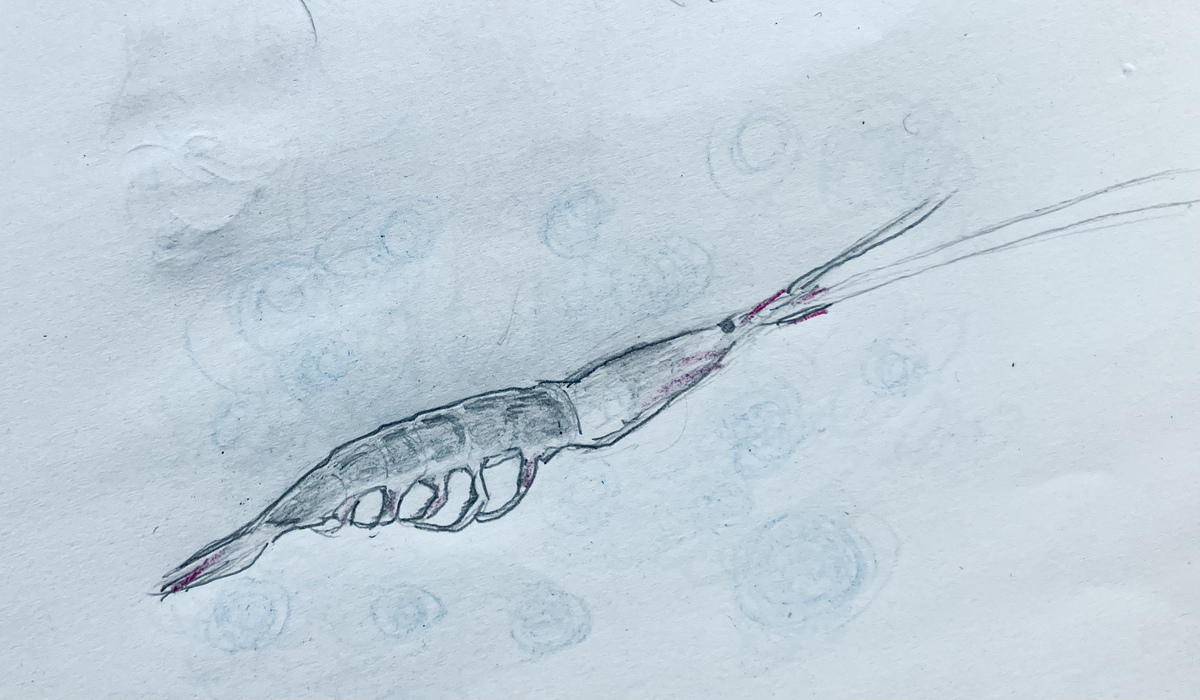
富山湾の奥深く、立山連峰から流れ込む冷たい河川水が日本海の深層水と混じり合う場所がある。
Deep in Toyama Bay, there is a place where cold river water flowing from the Tateyama mountain range mixes with the deep water of the Sea of Japan.
そこは「藍瓶(あいがめ)」と呼ばれる海底谷で、水深150メートルから300メートルを超える特別な世界だ。
It is a submarine canyon called "Aigame (Blue Bottle)," a special world where the depth exceeds 150 to 300 meters.
その藍瓶のやや浅い層、水深約200メートルの薄暗い海中で、一匹のシロエビが孵化した。
In the slightly shallower layer of the Aigame, at a depth of about 200 meters in the dim sea, one white shrimp hatched.
名前はない。ただの小さな命。体長わずか5ミリほどのふ化幼生だった。
It had no name. It was just a tiny life—a newly hatched larva about 5 millimeters long.
体はほとんど透明で、細かな赤い斑点が無数に浮かび、ほのかにピンクがかった姿だった。
Its body was almost transparent, dotted with countless tiny red spots, giving it a faint pink hue.
まだハサミも弱く、腹肢で卵を抱いていた母親の姿とはまるで違うが、すでにエビの形をしていた。
Its pincers were still weak, and although it looked very different from its mother who carried eggs with her abdominal limbs, it already had the shape of a shrimp.
シロエビの幼生は、他の多くの甲殻類のように大きく姿を変える変態をせず、親に似た姿で海に放たれる。
Unlike many other crustaceans, white shrimp larvae do not undergo a major metamorphosis; they are released into the sea already resembling their parents.
生まれたばかりの彼は、プランクトンの群れに紛れて漂っていた。
The newly hatched larva drifted along, blending into swarms of plankton.
富山湾のこの海域は、河口近くの海底谷が沿岸部に深く切れ込んでいるおかげで、栄養豊富な水が集まりやすい。
Thanks to the submarine canyons near the river mouths cutting deeply into the coastal area, this part of Toyama Bay collects nutrient-rich water easily.
植物プランクトンや動物プランクトン、小さなミジンコ類が無数に揺れていた。
Countless phytoplankton, zooplankton, and tiny water fleas drifted about.
彼は小さな口でそれらを懸命に捕らえ、食べた。
He eagerly caught and ate them with his tiny mouth.
ふ化後12〜19日ほど、この浮遊生活を続ける。
This planktonic life continued for about 12 to 19 days after hatching.
海流に乗りながら少しずつ成長し、体を硬くする脱皮を繰り返す。
While riding the ocean currents, he grew little by little, repeatedly molting to harden his body.
危険は多かった。
There were many dangers.
ホタルイカの幼体や小さな魚、時には同種の成体にさえ狙われる。
He was targeted by young firefly squid, small fish, and sometimes even adult white shrimp of his own kind.
多くの兄弟姉妹がこの段階で命を落とした。
Many of his siblings lost their lives at this stage.
やがて体長が1センチを超える頃、彼は「稚エビ」から「未成体」へと移り変わった。
When his body length eventually exceeded 1 centimeter, he transitioned from a juvenile to a sub-adult.
体はまだ小さかったが、側扁した平たい体形がはっきりし、
His body was still small, but his laterally flattened shape became clear,
額角のない頭部に前方へ向いた小さな棘が目立つようになった。
and a small forward-pointing spine on his head without a rostrum became noticeable.
第1脚と第2脚のハサミも徐々に強くなり、長節の後ろにトゲが生えてきた。
The pincers on his first and second legs gradually strengthened, and spines grew on the back of the long segments.
透明感のある体は、太陽の光が届かない深海ではほとんど目立たない完璧なカモフラージュだった。
His translucent body was perfect camouflage in the deep sea, where sunlight does not reach, making him almost invisible.
彼の生活は、昼と夜で大きく変わる。
His life changed greatly between day and night.
昼間は水深150〜300メートルの深い層で群れをなして静かに泳いでいた。
During the day, he swam quietly in groups in the deep layer between 150 and 300 meters.
藍瓶の谷底近く、冷たい日本海固有水の中で、
Near the bottom of the Aigame canyon, in the cold Japan Sea proper water,
ゆっくりと体を左右に振るように遊泳する。
he swam by gently swinging his body from side to side.
中層遊泳性のエビとして、底に張り付くことはほとんどない。
As a mid-water swimming shrimp, he rarely clung to the bottom.
群れでいることで、単独より捕食者に気づきやすく、生存率を上げていた。
By staying in a group, he could detect predators more easily than if alone, increasing his survival rate.
餌は主に動物プランクトンや小さな甲殻類。
His main food was zooplankton and small crustaceans.
明確に「狩り」をするような激しい行動ではなく、周囲の小さな生き物を捉えては口に運ぶ、ゆったりとした摂餌だった。
It was not an intense "hunt," but a calm feeding behavior of catching small creatures around him and bringing them to his mouth.
日が沈み、富山湾の海面が暗くなると、彼の群れは少しずつ上昇を始めた。
When the sun set and the surface of Toyama Bay darkened, his group began to rise slowly.
夜になると水深100メートル以浅まで浮上する習性がある。
At night, they have the habit of ascending to depths shallower than 100 meters.
より豊富なプランクトンが集まる浅い層で、積極的に餌を求めるのだ。
In the shallower layers where more abundant plankton gather, they actively seek food.
夜の海は彼らにとって「食事の時間」。
The night sea was their "feeding time."
透明な体がわずかに光を反射し、キラキラと輝くように見える瞬間もあるが、
There are moments when their translucent bodies reflect light and sparkle,
深い藍色の世界ではほとんど気付かれない。
but in the deep blue world, they are hardly noticed.
季節が巡り、夏から秋にかけて——7月から11月頃——彼は成熟を迎えた。
As the seasons turned, from summer to autumn—around July to November—he reached maturity.
体長は5〜6センチほどに成長した。
His body length grew to about 5 to 6 centimeters.
メスは体長5.5センチ前後で成熟し、生涯に2回程度産卵すると言われる。
Females mature at around 5.5 centimeters and are said to spawn about twice in their lifetime.
彼は成熟したメスと出会い、交尾を行った。
He met a mature female and mated.
メスは卵を腹肢に付着させ、抱卵する。
The female attached the eggs to her abdominal limbs and carried them.
卵は1〜2ミリほどの楕円形で、1回の抱卵で数十から300個程度。
The eggs were oval, about 1 to 2 millimeters, with dozens to about 300 per brood.
メスは卵を抱えたまま、孵化するまで保護する。
The female protects the eggs until they hatch while carrying them.
抱卵中のメスは動きがやや鈍くなるが、群れの中で守られる。
Females carrying eggs move a little more slowly, but they are protected within the group.
彼自身も、次の世代の父親となる頃には、すでに1年半以上を生きた計算になる。
By the time he became a father of the next generation, he had already lived for more than a year and a half.
シロエビの寿命は短い。2年〜2年半程度。
The lifespan of white shrimp is short—about 2 to 2.5 years.
一生に2〜3回の産卵機会がある個体もいるが、ほとんどの命は2年半で終わる。
Some individuals may have 2 to 3 spawning opportunities in their lifetime, but most lives end within 2.5 years.
冬が近づくと、彼の群れは再び深い藍瓶の層に戻った。
As winter approached, his group returned once again to the deep layers of the Aigame.
富山湾の海底谷は、シロエビにとってほぼ一生の生活圏だ。
The submarine canyons of Toyama Bay are almost the entire living area for white shrimp throughout their lives.
ふ化幼生から成体まで、主に河口付近の海底谷周辺で生活を完結させる。
From hatching larvae to adults, they complete their life cycle mainly around the submarine canyons near the river mouths.
湾外へ大きく流されることは少なく、この限られた豊かな環境が、彼らを支えていた。
They are rarely carried far outside the bay; this limited but rich environment supported them.
2回目の産卵期を迎えたある秋の日。
On a certain autumn day during his second spawning season,
彼はすでに体長7センチ近くになり、群れの中でもやや年長の存在になっていた。
he had already grown to nearly 7 centimeters and was one of the older members in the group.
メスたちが再び卵を抱き始めた頃、彼の体にも老いが忍び寄っていた。
Around the time the females began carrying eggs again, old age was creeping up on his body.
脱皮を繰り返すたび、体は少しずつ弱くなり、動きが鈍くなった。
With each molt, his body grew slightly weaker and his movements became slower.
ある夜、浅い層へ浮上した群れの中で、突然の強い海流に巻き込まれた。
One night, while the group had ascended to the shallower layer, he was suddenly caught in a strong current.
彼は必死に泳いだが、若い頃のような力は残っていなかった。
He swam desperately, but he no longer had the strength of his youth.
藍瓶の冷たい水の中で、彼の体はゆっくりと沈んでいった。
In the cold water of the Aigame, his body slowly sank.
透明だった体は白く変わり始め、まるで「白えび」の名前の通りになった。
His once transparent body began to turn white, just like the name "white shrimp."
最後の瞬間、彼の体は他のプランクトンや有機物とともに、深い海底の食物連鎖の一部となった。
In his final moment, his body became part of the deep-sea food chain, together with other plankton and organic matter.
しかし、彼の命はそこで終わらない。
However, his life does not end there.
産卵を終えたメスたちから、数多くの幼生がまた藍瓶に放たれる。
From the females who finished spawning, many larvae are released again into the Aigame.
ふ化幼生たちはプランクトンを食べ、成長し、次の春には再び漁師たちの網にかかる「宝石」となるのだ。
The hatched larvae eat plankton, grow, and in the following spring become the "gems" once again caught in the fishermen's nets.
富山湾のシロエビは、なぜここだけでこんなに豊かに群れるのか。
Why do white shrimp in Toyama Bay gather so abundantly only here?
まだ完全に解明されていない謎が多い。
Many mysteries still remain unsolved.
海底谷の特殊な地形が作り出す安定した水温と豊富な餌、昼夜の垂直移動による効率的なエネルギー利用、短い寿命ゆえの素早い世代交代——
The stable water temperature and abundant food created by the special topography of the submarine canyon, efficient energy use through day-night vertical migration, and rapid generational turnover due to their short lifespan—
それらが重なり合って、この「富山湾の宝石」を生み出している。
all these factors combine to create the "gems of Toyama Bay."
ある漁師は言う。
A fisherman once said,
「シロエビは海の宝石だ。でも、宝石は儚い。朝日を浴びてキラキラ輝く姿は、水揚げの瞬間だけ。」
"White shrimp are gems of the sea. But gems are fleeting. Their sparkling appearance in the morning sun lasts only for the moment they are landed."
「あの透明なピンクは、深海の暗闇で生き抜くための美しさなんだよ」。
"That transparent pink is the beauty they need to survive in the darkness of the deep sea."
藍瓶の深い藍色の世界では、今も無数のシロエビが、静かに、しかし確実に命をつないでいる。
In the deep blue world of the Aigame, countless white shrimp continue to quietly yet surely pass on life even now.
昼は深く、夜は少し浅く。
Deep during the day, slightly shallower at night.
透明な体でプランクトンを食べ、抱卵し、短い生涯を駆け抜ける。
They eat plankton with their transparent bodies, carry eggs, and race through their short lives.
彼らの物語は、人間が思うよりずっと静かで、ずっと美しい。
Their story is far quieter and far more beautiful than humans imagine.
シロエビ(白えび、正式名称:シラエビ)
日本を代表する小型のエビで、特に富山湾の宝石と称される人気の海産物です。
1. 分類と名称
- 分類: オキエビ科シラエビ属(学名:Pasiphaea japonica)。
- 別名: シロエビ、ヒラタエビ、ベッコウエビなど。
- 日本の固有種で、学名の「japonica」からも分かるように日本沿岸に生息します。
2. 形態的な特徴
- 体長: 約5〜8cm程度(主に6〜7cm前後)の小型エビ。
- 体形: 体が左右に平たく側扁(横から押したように扁平)しているのが特徴。額角(エビの頭部のツノ)がなく、目のすぐ後ろに前方に向いた棘が1つある。
- 体色: 水揚げ直後は半透明の淡いピンク色(透明な体に薄い赤色の小さな斑点が無数にあり、ほんのり赤く見える)。時間が経つと乳白色に変わり、「白えび」と呼ばれるようになります。朝日を浴びてキラキラ輝く姿から「富山湾の宝石」と呼ばれます。
- その他の特徴: 第1脚と第2脚にハサミがあり、長節の後縁にトゲが多い。熱を加えても他のエビのように赤くならない。
3. 生息地と生態
- 主な生息地: 富山湾の深海(水深約150〜300m)。特に富山湾特有の海底谷「あいがめ(藍瓶)」付近に群れで生息します。
- 昼間は深海にいて、夜になるとやや浅い水深(100m前後)まで浮上する中層遊泳性のエビです。
- 日本沿岸(駿河湾、相模湾、遠州灘など)にも分布しますが、商業的に大量漁獲できるのは富山湾だけで、希少性が高いのが特徴です。
- 漁期は主に4月〜11月頃。資源保護のため、漁期制限や鮮度管理(冷海水かけ流しなど)が行われています。
4. 味と食感の特徴
- 味: 上品で繊細な甘みが強く、濃厚でありながらあっさりした味わい。
- 食感: とろけるような柔らかさとプリッとした歯ごたえのバランスが良い。
- 鮮度が落ちやすいため、産地では新鮮な状態で楽しむのが一般的。生食(刺身)が最もその甘みと食感を堪能できる食べ方とされます。他にも天ぷら、から揚げ、釜揚げ、素麺の出汁など幅広い料理に使われます。
5. その他のポイント
- サクラエビとは分類が異なり(シラエビは抱卵亜目)、体がサクラエビよりやや大きく平たい。
- 寿命は2〜2.5年程度で、産卵期は7〜11月頃。産卵数は比較的少ないと言われています。
- 富山県では「富山湾のシロエビ」としてブランド化され、観光や食文化の象徴となっています。
シロエビは見た目の美しさだけでなく、繊細な味わいと希少性から高く評価されるエビです。
富山湾を訪れた際や、産地の新鮮なものをぜひ味わってみてください!
(注: 一般的に「シロエビ」と言えば上記のオキエビ科のものを指しますが、稀に他の白いエビ類を指す場合もあるので、文脈で確認すると良いでしょう。)
シロエビの生態はまだ研究途上の部分が多く、謎も残っていますが、こうした知見から想像を膨らませました。
※この物語は、AIと一緒に考えました。
生態や習性は実在の生き物を参考にしていますが、ストーリー自体はフィクションです。
