ふわふわのペットハムスターの原点は、シリアの荒野に生きる野生の黄金の影。
今、絶滅の危機に瀕しています。
彼らが今、どんな環境で生きているのか——。
短い物語と対訳で、楽しくわかりやすくお届けします。
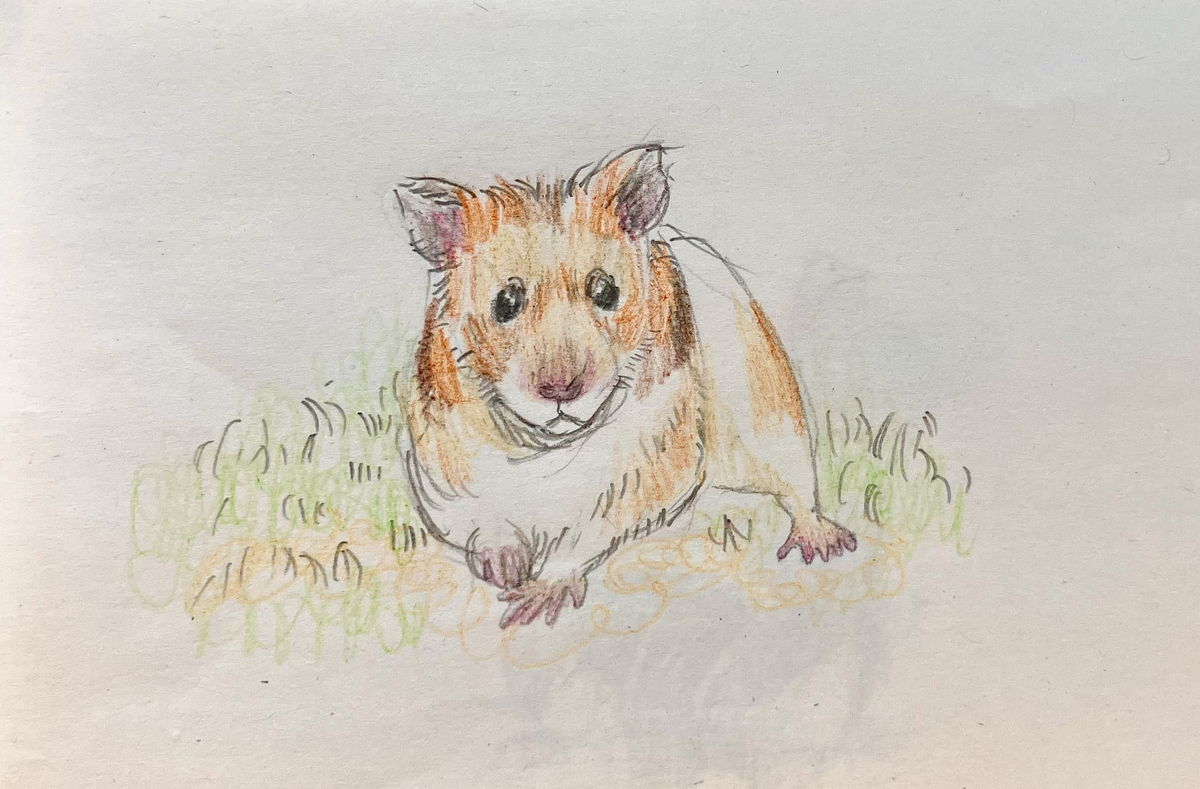
シリア北部、アレッポの古い高原。乾いた風が小麦の残株を揺らす夕暮れ時、土の下深くに掘られた巣穴から、一匹のゴールデンハムスターが顔を出した。
In the ancient highlands of northern Syria near Aleppo, at dusk when the dry wind rustles the wheat stubble, a golden hamster emerged from a deep burrow dug under the soil.
名前はない。背中は金色がかった茶色で、腹は純白。
He has no name. His back is a golden-brown color, and his belly is pure white.
ペットショップで見かけるふわふわした子たちとは違い、毛並みは荒れ、目は鋭く警戒に満ちている。
Unlike the fluffy ones seen in pet shops, his fur is rough and his eyes are sharp and full of caution.
彼は「黄金の影」とでも呼ぶべき、野生の最後の子孫の一人だった。
He was one of the last descendants of the wild "golden shadows."
彼の名をここでは「アレッポ」と呼ぼう。アレッポは生後約8ヶ月。体長15センチ、体重110グラム。
Let's call him "Aleppo" here. Aleppo is about 8 months old, 15 cm long, and weighs 110 grams.
生まれてからこの丘の地下トンネルで育ち、母の教えを胸に刻んで生きてきた。
Born and raised in the underground tunnels of this hill, he has lived by the lessons his mother taught him.
夜行性の彼にとって、太陽が沈む瞬間が一日のはじまりだ。
For this nocturnal creature, the moment the sun sets marks the beginning of his day.
頰袋を空っぽにし、細い前足で土を払いながら地上へ出る。
He empties his cheek pouches, brushes off the soil with his small front paws, and emerges above ground.
空はまだ赤く、遠くでフクロウの声が響く。
The sky is still red, and the hoot of an owl echoes in the distance.
敵は多い。夜のキツネ、猛禽類、そして何より人間の影。
There are many enemies: night foxes, birds of prey, and above all, the shadow of humans.
アレッポは素早く走り始めた。
Aleppo began to run swiftly.
一晩で10キロ、時には20キロを移動することもある。
In one night, he may travel 10 kilometers, sometimes even 20 kilometers.
鼻を地面に近づけ、種子や乾燥した草の根、時折見つかる甲虫を探す。
He lowers his nose to the ground, searching for seeds, dried grass roots, and occasional beetles.
頰袋いっぱいに詰め込み、巣穴へ運ぶ。
He stuffs them into his cheek pouches and carries them back to the burrow.
野生のゴールデンハムスターは「貯蔵屋」だ。
Wild golden hamsters are "hoarders."
巣の奥深くに食料庫を作り、厳しい乾季に備える。
They create food stores deep inside their burrows to prepare for the harsh dry season.
雨が少なく、土が固く、植物がまばらなこの土地で、彼らは何でも食べる雑食性に進化した。
In this land with little rain, hard soil, and sparse plants, they evolved into omnivores that eat almost anything.
地下の巣は複雑だ。
Their underground burrows are complex.
直径4~5センチの入り口から枝分かれし、寝床、食料庫、排泄室に分かれる。
From a 4-5 cm entrance, tunnels branch out into sleeping areas, food stores, and toilet chambers.
1930年、動物学者のイスラエル・アハロニがこの近くで一匹のメスと11匹の子を見つけたという話は、遠い伝説のように語り継がれている。
The story that in 1930, zoologist Israel Aharoni found a female and her 11 pups nearby has been passed down like a distant legend.
あの家族の子孫が今、世界中で数千万匹のペットとして暮らしている。
The descendants of that family now live as tens of millions of pets around the world.
一方、ここに残った野生の子らは、たった数千匹。
Meanwhile, only a few thousand remain in the wild here.
生息範囲は四国ほどの狭い土地に限られる。
Their habitat is limited to an area about the size of Shikoku.
夜が深まる。アレッポは縄張りを巡回する。
As the night deepens, Aleppo patrols his territory.
体側の臭腺で石や草に匂いを付け、他のハムスターに「ここは俺の領域」と警告する。
He marks stones and grass with the scent glands on his sides, warning other hamsters, "This is my territory."
彼らは極めて単独主義者だ。
They are extremely solitary.
繁殖期以外、同族と出会えば激しく争う。
Except during breeding season, they fiercely fight when they meet others of their kind.
寿命は野生で1~2年。
Their lifespan in the wild is 1-2 years.
多くの兄弟姉妹が天敵や飢え、寒さで失われる。
Many siblings are lost to predators, hunger, or cold.
今夜も異変があった。遠くで機械の音が響く。
There was trouble again tonight.
人間のトラクターが夜通し畑を耕している。
The sound of machinery echoes from afar. Human tractors are plowing fields all night.
かつての草原は農地に変わり、巣穴は潰され、食料となる植物は減った。
Former grasslands have turned into farmland, burrows are destroyed, and food plants have decreased.
シリアの内戦はアレッポの丘にも影を落とす。爆音、銃声、難民の流れ。
The Syrian civil war also casts a shadow over Aleppo's hills — explosions, gunfire, and streams of refugees.
気候変動による干ばつも深刻だ。
Drought caused by climate change is also serious.
雨が減り、植生が枯れ、食料が乏しくなる。
Rainfall decreases, vegetation withers, and food becomes scarce.
アレッポは危険を察知し、急いで巣へ戻る。
Sensing danger, Aleppo hurriedly returns to his burrow.
体を丸め、薄い目で周囲をうかがう。
He curls up and watches his surroundings with half-closed eyes.
朝が来るまで、ここが彼の城だ。
Until morning comes, this is his castle.
ペットとして愛されている一方で、野生の彼らは深刻な脅威にさらされている。
While loved as pets, their wild counterparts face serious threats.
農業拡大、干ばつ、紛争により生息地が失われ、個体数は減少の一途をたどっている。
Due to agricultural expansion, drought, and conflict, their habitat is being lost and their numbers continue to decline.
黄金の毛が月光に輝く。
His golden fur shines in the moonlight.
彼は走り出す。種子を一つ、運べるだけ運んで、未来に繋ぐために。
He starts running again — to carry as many seeds as possible and connect to the future.
シリアの夜に、黄金の影は今も消えずに走り続けている。
In the Syrian night, the golden shadows continue to run without disappearing.
野生のゴールデンハムスター(シリアンハムスター、Mesocricetus auratus)
ペットとしてよく知られるハムスターの原種です。
現在は絶滅危惧種(IUCNでEndangered)で、自然下での生息数は非常に少なく、調査も限定的です。
生息地
- 主にシリア北部(アレッポ周辺)からトルコ南部の乾燥した草原、岩場、農耕地帯のごく狭い地域に生息。
- 四国程度の限られた範囲で、推定生息数は2500匹以下とされ、農業開発や生息地の破壊、紛争などの影響を受けています。
外見の特徴(野生型)
- 体長:約14~18cm程度。
- 体重:100~150g前後(ペットよりやや軽めの場合が多い)。
- 毛色:背中が金色がかった茶色(ゴールデンブラウン)、腹部が白いのが典型的。これは乾燥した環境での保護色(カモフラージュ)です。
- ペットのように長毛や白・黒・斑点などの派手な色は野生では存在せず、人為的な品種改良によるものです。
生態・行動の特徴
- 夜行性:昼間は巣穴で休み、夜間に活動。視力は弱く、嗅覚・触覚(髭)・聴覚を頼りにします。
- 単独行動・縄張り意識が強い:成体は基本的に孤独で、他の個体(特に同性)と出会うと激しく争います。繁殖期以外は同居しません。
- 巣穴生活:自ら穴を掘るか、他の動物の穴を利用。食料を頰袋に詰めて運び、貯蔵(larder hoarder)します。一晩で10~20km以上移動することもあります。
- 食性:草食寄りの雑食性。種子、植物の葉・茎・根・果実、昆虫、小動物などを食べます。乾燥地帯の厳しい環境に適応した何でも食べる性質です。
- 冬眠:野生では寒い時期に冬眠しますが、飼育下では推奨されません。
繁殖・寿命
- 野生での寿命は1~2年程度(天敵や環境の厳しさのため短い)。
- 繁殖は比較的速く、1回の出産で複数匹の子を産みますが、野生では生存率が低いです。
- ペットとして広まったきっかけは1930年にシリアで捕獲された一家族(メス1匹と子11匹)で、ほぼすべてのペット個体はこの血統に由来します。
ペットとの違いのポイント
- 野生型は警戒心が強く、ペットより活発で縄張り意識が強い傾向。
- ペットは品種改良により性格がおっとりし、毛色・毛質が多様化、寿命も2~3年程度に延びやすいです。
野生のゴールデンハムスターは希少で、保護の観点からも直接観察するのは非常に困難です。
ペットとして楽しむ場合は、野生の生態を尊重した飼育環境(十分なスペース、夜行性に配慮した静かな場所、適切な食事)を整えてあげてください。
※この物語は、AIと一緒に考えました。
生態や習性は実在の生き物を参考にしていますが、ストーリー自体はフィクションです。
