オグロヌーの視点で語る、セレンゲティの大移動物語。
ウシのような頑丈さ、カモシカのような速さ、ヤギのような声、ウマのような黒い尾——
不思議な魅力を持つ彼らの過酷で美しい日常を、ぜひお楽しみください。
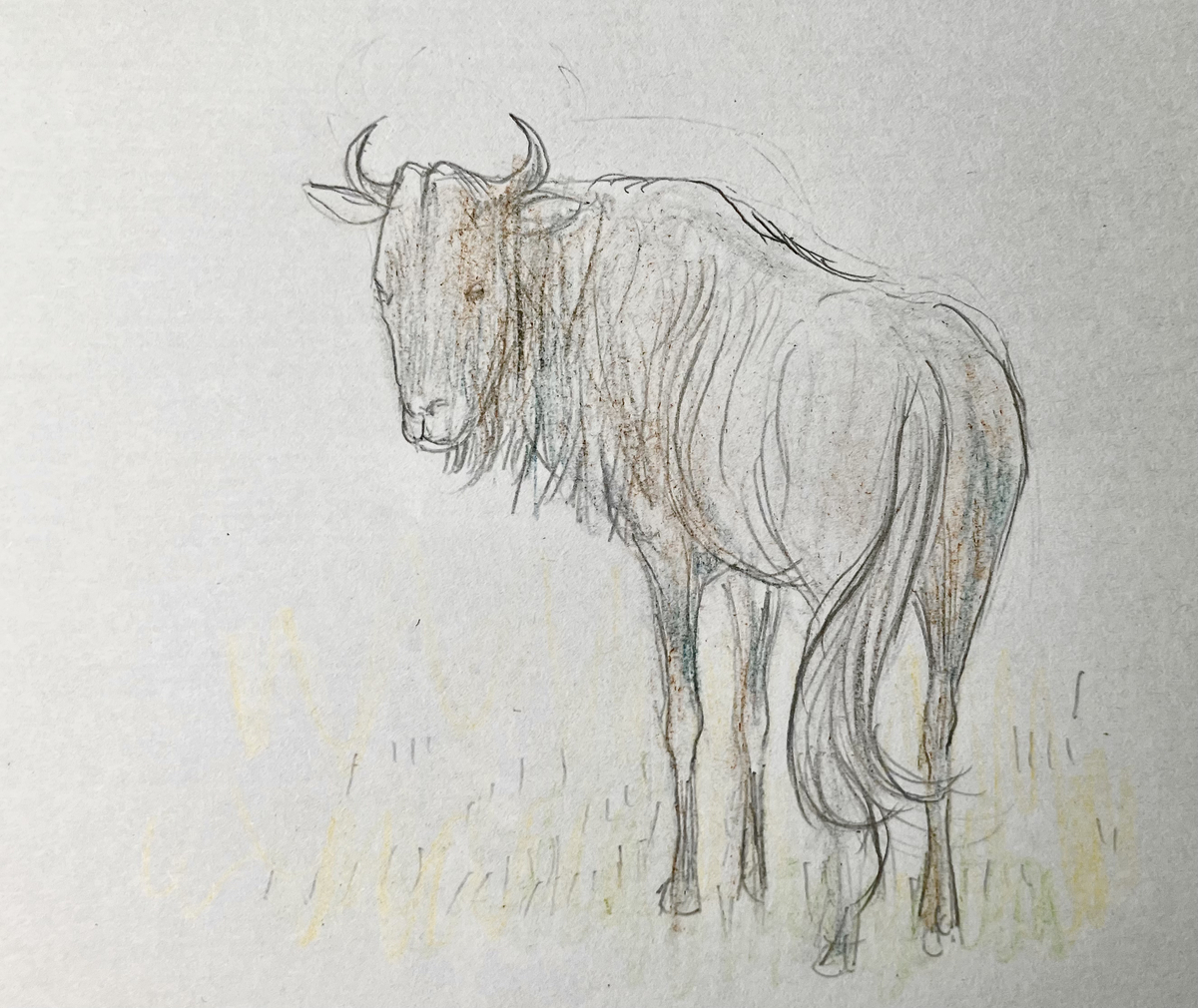
わたしは、オグロヌー。
I am a blue wildebeest.
青灰色の体に黒い横縞を走らせ、胸に白い長い髭を垂らし、黒い尾を風になびかせる。
I have a blue-gray body with black stripes, long white whiskers hanging from my chest, and a black tail that flutters in the wind.
人間たちは「ウシカモシカ」と呼ぶらしいが、わたしにとってはただの「わたし」だ。
Humans call me “wildebeest” or “gnu,” but to me, I am simply myself.
ウシのようにがっしりした前半身で草をこそぎ取り、
With a sturdy front body like a cow, I tear up grass;
カモシカのように細い後ろ脚で大地を蹴り、
with slender hind legs like an antelope, I kick the earth;
ヤギのように低い声で「ゲンッ!」と鳴き、ウマのように黒い尾を振って群れの仲間を呼ぶ。
with a low voice like a goat, I call “Gnnn!”; and with a black tail like a horse, I signal my herd.
それがわたしたちの誇りだ。
This is our pride.
生まれたのは、セレンゲティの南の平原。
I was born on the southern plains of the Serengeti.
雨季の始まりだった。
It was the beginning of the rainy season.
母の周りでは、8万頭以上の子が一斉に生まれた。
Around my mother, more than 80,000 calves were born at the same time.
それがわたしたちの知恵だ。
This synchronized birth is our wisdom.
ライオンやハイエナがいくら腹を空かせていても、子が多すぎて追いつかない。
No matter how hungry the lions and hyenas are, there are too many calves for them to catch them all.
わたしは生まれて数分で立ち上がり、母の乳を飲みながら歩き始めた。
Within minutes of birth, I stood up and began walking while drinking my mother’s milk.
脚が細くても、すぐに大地を蹴れる。
Even with slender legs, I could kick the ground right away.
それがカモシカの血だ。
That is the blood of the antelope in me.
母はいつも言った。「草が呼んでいる。雨の匂いがする方へ行け」。
My mother always said, “The grass is calling. Go where the smell of rain is.”
わたしたちは鼻がいい。
We have a keen sense of smell.
足の裏の腺から出す匂いで道を残し、群れでつながる。
We leave scent trails from glands on our hooves and stay connected as a herd.
リーダーはいない。
There is no single leader.
ただ、みんなで同じ方向を向く。
We simply all face the same direction.
シマウマやトムソンガゼルも一緒に来る。
Zebras and Thomson’s gazelles travel with us too.
彼らは高い草を食べ、わたしは短い草をこそぐ。
They eat tall grass, while I graze on short grass.
ウシの頑丈な口で、地面すれすれの新芽をむしるのが得意だ。
With my strong cow-like mouth, I am good at ripping new shoots right at ground level.
幼い頃、最初の危険が訪れた。
When I was young, the first danger came.
乾季が近づき、群れが北へ動き始めたときだ。
It was when the dry season approached and the herd began moving north.
ライオンが草むらから飛び出した。
A lion burst out from the grass.
わたしは母の横にぴったりくっつき、ジグザグに走った。
I stayed close to my mother’s side and ran in a zigzag pattern.
時速80km近く出せる脚。
My legs can reach nearly 80 km per hour.
カモシカのように軽やかで、ウシのように持久力がある。
They are light like an antelope’s and have the endurance of a cow.
母の黒い尾が風を切る音が聞こえた。
I could hear the sound of my mother’s black tail cutting through the wind.
「ついてこい!」という合図だ。
It was the signal that meant “Follow me!”
その日、何頭かが犠牲になった。
That day, several were lost.
でも群れは止まらない。
But the herd does not stop.
止まれば全員が飢える。
If we stop, everyone will starve.
成長するにつれ、わたしはオスになった。
As I grew, I became a male.
角が外側に湾曲し、先が内側へ向かう。
My horns curve outward and then inward at the tips.
立派な武器だ。
They are fine weapons.
縄張りを持つオスは、喉を膨らませて低い声で鳴く。
Males holding territory inflate their throats and call in a low voice.
ヤギのような「ゲンッ、ゲンッ!」という声が2km先まで響く。
The goat-like “Gnnn, Gnnn!” carries for two kilometers.
メスを引きつけるためだ。
It is to attract females.
雨季の終わりに交尾の季節が来る。
The mating season comes at the end of the rainy season.
わたしは若いオスたちと群れを作り、経験を積んだ。
I joined a group of young males and gained experience.
メスは子を産むために、群れの真ん中で出産する。
Females give birth in the center of the herd for safety.
わたしは周りを警戒しながら草を食む。
I graze while staying alert to the surroundings.
子はすぐに立ち上がり、母の黒い尾の後を追う。
The calves stand up immediately and follow their mothers’ black tails.
やがて、大きな旅が始まった。
Eventually, the great journey began.
大移動だ。セレンゲティの南から北のマサイマラへ。
It is the Great Migration—from the south of the Serengeti to the Masai Mara in the north.
総距離1600km以上。
The total distance is over 1,600 km.
1年で円を描くように回る旅。草と水を求めて。
It is a journey that draws a great circle each year, in search of grass and water.
乾季になると、草原は黄色く枯れる。
When the dry season comes, the plains turn yellow and dry.
わたしたちは鼻を上げ、遠くの雨の匂いを嗅ぐ。
We lift our noses and smell the rain far away.
50km先の雨さえ感じ取れるという。
It is said we can detect rain even 50 km ahead.
群れは巨大になる。150万頭のオグロヌー、数十万頭のシマウマとガゼル。一つの生き物のように大地を覆う。
The herd becomes enormous. 1.5 million blue wildebeest, hundreds of thousands of zebras and gazelles cover the land like one giant creature.
朝早く、太陽が昇る前に動き出す。
We start moving early in the morning before sunrise.
早朝と夕方が一番活発だ。
We are most active at dawn and dusk.
日中は休んで反芻する。
During the day, we rest and ruminate.
ウシの胃袋は便利だ。
A cow’s stomach is very useful.
短い草をたくさん食べて、ゆっくり消化する。
We eat a lot of short grass and digest it slowly.
歩くときは、岩のような体を揺らしながら進む。
When walking, we sway our rock-like bodies.
前重心で、がっしりした肩が頼もしい。
Our front-heavy build and sturdy shoulders give us strength.
尾を振って後ろの仲間を呼ぶ。
We swing our tails to call the ones behind us.
黒い尾の房が、仲間への合図になる。
The tuft on our black tail is a signal to our companions.
一番の試練は、マラ川の渡河だ。
The greatest trial is crossing the Mara River.
北上する頃、川は満ち、ワニが潜む。
When we head north, the river is full and crocodiles lurk.
群れが川岸に集まる。
The herd gathers at the riverbank.
何日も待つ個体もいるが、誰かが飛び込むと一斉に続く。
Some wait for days, but once one jumps in, everyone follows at once.
「今だ!」という合図はない。
There is no signal of “Now!”
ただ、流れに身を任せる。
We simply surrender ourselves to the current.
わたしは脚をバタバタさせ、泳ぐ。
I kick my legs frantically and swim.
ウマのように長い尾が水を切る。
My long tail, like a horse’s, cuts through the water.
空洞のある骨が体を浮かべ、筋肉質の脚が水を蹴る。
My hollow bones help me float, and my muscular legs push against the water.
周りでは叫び声が響く。
Around me, cries echo.
ワニの顎が閉じる音、溺れる仲間の悲鳴。
The sound of crocodiles’ jaws snapping shut, and the screams of drowning companions.
でも、ほとんどの者が対岸に辿り着く。
Yet most of us reach the other side.
渡った先は緑の草原。
Beyond the river lies green grassland.
新しい草が待っている。
Fresh grass awaits us.
命を賭けた価値がある。
It is worth risking our lives.
ある年、わたしは怪我をした。
One year, I was injured.
ハイエナに後ろ脚を噛まれた。
A hyena bit my hind leg.
痛かったが、群れは待ってくれない。
It hurt, but the herd would not wait.
少し遅れてついていく。
I followed a little behind.
そのとき、ヤギのような髭が役立った。
Then my goat-like whiskers helped.
胸の白い毛が埃を払い、息を整える。
The white hair on my chest brushed away dust and helped me catch my breath.
カモシカの脚は治るまで我慢した。
My antelope legs endured until they healed.
ウシの頑丈さが、わたしを支えた。
My cow-like toughness supported me.
夜は星の下で休む。
At night, we rest under the stars.
群れで寄り添い、1~2mの距離を保つ。
We huddle together, keeping about 1 to 2 meters apart.
母と子はもっと近く。
Mothers and calves stay closer.
月明かりがあれば、夜も少し草を食む。
If there is moonlight, we graze a little even at night.
天敵はいつも近くにいる。ライオン、チーター、ハイエナ、野犬。そして川のワニ。
Predators are always nearby—lions, cheetahs, hyenas, wild dogs, and crocodiles in the river.
でも、群れが大きいほど安全だ。
But the larger the herd, the safer we are.
誰かが危険を察知すれば、一斉に走る。
If one senses danger, we all run together.
ジグザグの逃げ方を知っている。
We know how to escape in zigzags.
わたしたちは、ただ生きるために動く。
We move simply to live.
草を食べ、水を飲み、子を産み、旅を続ける。
We eat grass, drink water, give birth, and continue the journey.
それが草原の掟だ。
That is the law of the savanna.
何年か経ち、わたしは老いた。
After many years, I grew old.
角は少し擦り減り、体は重くなった。
My horns were slightly worn, and my body became heavier.
今は若いオスたちの群れから離れ、静かに草を食む日が多い。
Now I often stay away from the young males’ groups and quietly graze.
でも、雨の匂いがすると、体が疼く。
But when I smell rain, my body aches with longing.
黒い尾を振り、仲間を呼ぶ声が出る。
I swing my black tail and call to my companions.
「ゲンッ……まだ、行ける」。
“Gnnn… I can still go.”
わたしたちは、ウシの強さとカモシカの速さ、ヤギの声とウマの尾を併せ持つ、奇妙な生き物だ。
We are strange creatures that combine the strength of a cow, the speed of an antelope, the voice of a goat, and the tail of a horse.
人間が見る「大移動」は、わたしたちにとっては日常。
What humans call the “Great Migration” is simply our daily life.
飢えを避け、子を育て、命をつなぐための旅。
It is a journey to avoid hunger, raise our young, and continue life.
セレンゲティの風が吹くたび、草原はわたしたちの蹄の音で鳴る。
Every time the wind blows across the Serengeti, the plains ring with the sound of our hooves.
黒い尾をなびかせ、青灰色の体を揺らし、わたしはまた歩き出す。
With my black tail streaming behind me and my blue-gray body swaying, I begin walking once more.
次の雨が、どこかで待っているから。
Because the next rain is waiting somewhere.
オグロヌー(尾黒ヌー、英名:Blue wildebeestまたはCommon wildebeest、学名:Connochaetes taurinus)
アフリカのサバンナに生息するウシ科の大型草食動物で、ヌー属の代表的な種です。
別名「ウシカモシカ」と呼ばれるように、ウシのような頑丈な体型にカモシカのような脚、ヤギのようなヒゲ、ウマのような尾を組み合わせた独特の見た目が特徴です。
主な身体的特徴
- 体サイズ: 頭胴長(体長)170~240cm、体高(肩高)115~145cm、体重120~290kg(オスの方が大きく、250kg前後になることが多い)。
- 体色と模様: 全体は青灰色~灰褐色で、胴体に黒い横縞(縦縞のように見える場合もある)が入ることが多い。顔の前面が黒く、肩や背中にも黒っぽい縞模様が見られます。喉から胸にかけて白い長い毛(髭のようなもの)が生え、タテガミは黒っぽく立っています。
- 角: 雌雄ともにあり、下方外側へ湾曲し、先端が上方内側へ向かう形状。長さは40~73cm(オスの方が太くて長い)。スイギュウの角に似ていますが細めです。
- 尾: 名前の通り黒い尾(長さ60~100cm)で、先端に房があります。これがオジロヌー(白い尾)との大きな違いの一つです。
- その他: 前半身ががっしりしていて、後ろ脚が細い前重心の体型。顔の体毛は下方に向かっています。
生態・行動の特徴
- 生息地: ケニアから南アフリカにかけての東~南部アフリカの草原、サバンナ、開けた森林など。短い草を好み、野火後の新芽を食べます。
- 大移動: 乾季になると水や草を求めて大規模な群れで移動します(セレンゲティなどで有名な「ヌーの大移動」)。時速65km以上で走り、ライオンやハイエナなどの天敵から逃げます。
- 群れ: 通常はメスと子を中心とした群れで、オスは縄張りを持つか単独/若オス群で生活。草食性で、主に草を食べ、水を毎日飲む習性がありますが、数日耐えられます。
- 繁殖: 妊娠期間約8~8.5ヶ月。雨季後に1頭(稀に2頭)の子を産み、子はすぐに立ち上がって歩けます。
オジロヌー(Black wildebeest)との違い
ヌー属にはオグロヌーとオジロヌー(Connochaetes gnou)の2種がいます。主な違いは:
- 尾の色: オグロヌーは黒、オジロヌーは白。
- 角の向き: オグロヌーは横に広がるように湾曲、オジロヌーは前に向かってフック状に曲がる。
- 体色・サイズ: オグロヌーは青灰色で縞模様があり大きく、オジロヌーは暗褐色~黒っぽく縞が少なく小型。
- 分布: オグロヌーは広範囲(生息数150万頭以上)、オジロヌーは南部アフリカの一部に限られ稀少。
オグロヌーはアフリカの生態系で非常に重要で、セレンゲティなどの大移動が他の動物の食物連鎖を支えています。
日本では主にシロヒゲオグロヌー(白い髭の亜種)が見られることが多いです。
可愛らしい(?)独特の顔立ちと壮大な群れの行動が魅力的な動物ですよ!
※この物語は、AIと一緒に考えました。
生態や習性は実在の生き物を参考にしていますが、ストーリー自体はフィクションです。
